
03Line · Foreign Leadership
Foreign Entanglements & Global Solutions
No blank checks. No personal bargains. American judgment, lawfully used.
2027–2037A ten-year constitutional project beyond any one election or officeholder.
Power is not strategy when the rider no longer controls the animal.
“those who foolishly sought power by riding the back of the tiger ended up inside.”
Inside the Tiger
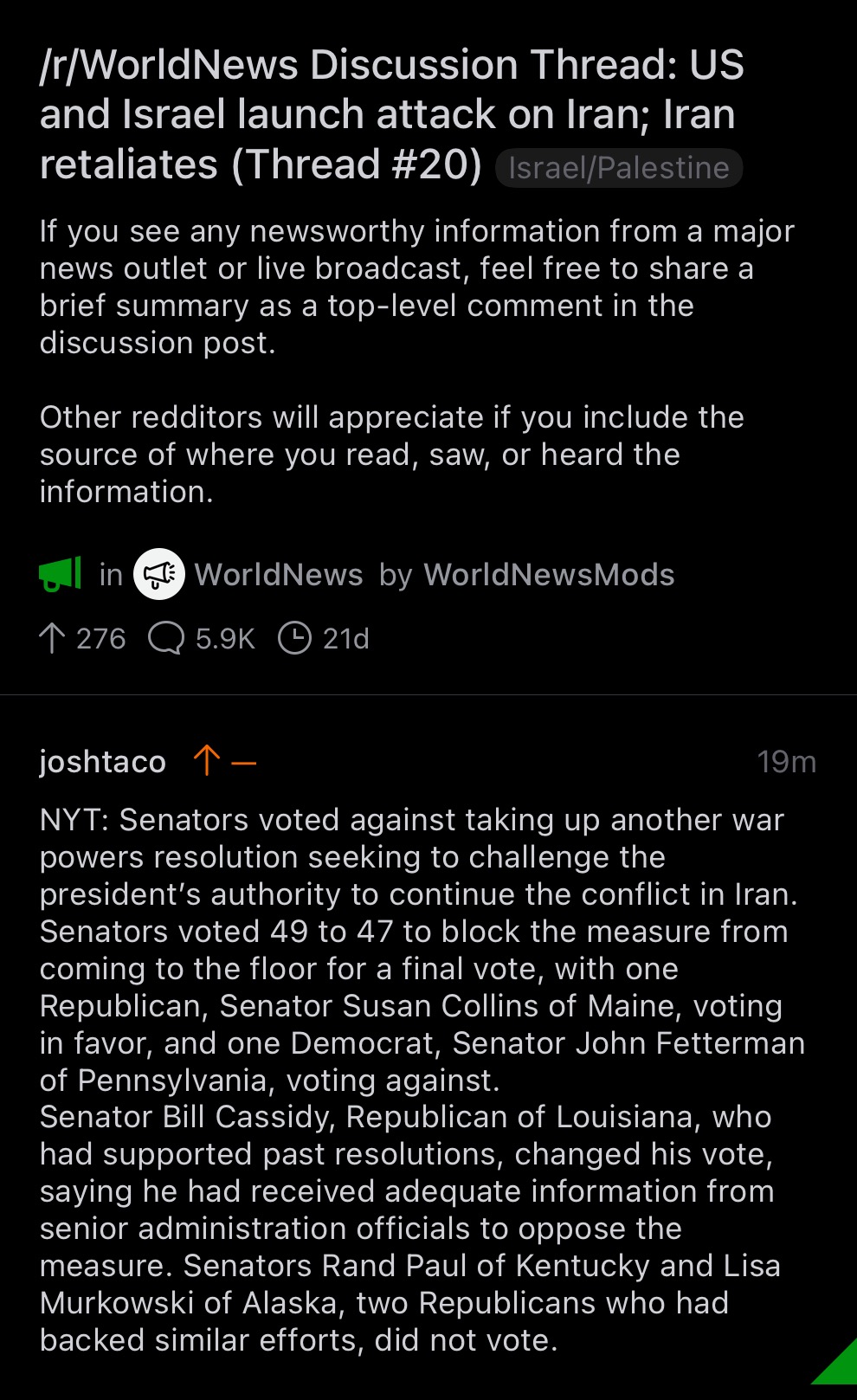
Congress did not authorize this war. It was unauthorized under the Constitution and unlawful under the War Powers Resolution.
NO BLANK CHECKSPersonal leverage is not a substitute for national strategy.
Congress decides when America goes to war. American judgment remains our own. America leads as an equal.
THE PROMISE
An alliance of equals must be able to say no. Congress decides when America goes to war.
LOWERED CAPACITY
Coons understood the danger. He called Netanyahu’s government the “most right-wing government in Israeli history” and accused it of “impermissibly using hunger as a weapon.” Then he said he had “voted not to abandon our steadfast ally.”
He named the danger and refused to use American leverage. An alliance that cannot say no is not an alliance of equals.
APRIL 15: THE BREAK
On April 14, Bernie Sanders announced votes to block $446.8 million in proposed arms sales to Israel. The next day, the Senate voted twice on whether to bring those disapproval resolutions out of committee. Lisa Blunt Rochester voted yes both times. Chris Coons voted no both times.
On the Caterpillar D9 bulldozers, Coons stood opposite 40 of 47 members of the Democratic caucus — 85.1%. On 12,000 one-thousand-pound bomb bodies, he stood opposite 36 of 47 — 76.6%.
After Vote 80, Sanders wrote that “more than 80% of the Democratic caucus stood with the American people.” Coons voted no. Lisa Blunt Rochester was among the 40 of 47 senators in the Democratic caucus who voted yes.
Votes 80 and 81 were motions to discharge. They were not final votes to send the equipment.
WHERE IS THE LINE NOW?
This was April. The question was recorded. On two arms-sale discharge motions, Lisa Blunt Rochester and large majorities of the Democratic caucus voted yes; Chris Coons voted no. If his own diagnosis was not enough to use American leverage, where is the line now?
THE ARMS LINE
The liberal consensus moved to block the sales. Coons stood pat.
- 01RESTRAINT
Carper voted to let the Senate consider the first Yemen restraint resolution. Coons voted to stop it. Coons then joined Carper on four later Yemen and Iran War Powers votes.
- 02THE OLD DELEGATION
Carper and Coons both voted against advancing three Israel arms-sale disapproval resolutions. Most of the Democratic caucus voted no too.
- 03DELAWARE MOVES
Blunt Rochester, now in Carper’s seat, voted to advance both arms-sale disapproval resolutions. Democratic-caucus majorities joined her. Coons voted no both times.
- 04THE BREAK
Coons and Blunt Rochester first voted together on Iran War Powers. Later that day, she voted to advance two Israel arms-sale disapproval resolutions. He voted no, opposite 85.1% and 76.6% of the Democratic caucus.
THE VOTES AND SOURCES
The four dots summarize 13 Senate roll calls. Seven entries—Votes 292–294 (Nov. 20, 2024), 454–455 (July 30, 2025), and 80–81 (Apr. 15, 2026)—were motions to discharge Israel arms-sale disapproval resolutions. Vote 79 was also a motion to discharge, on an Iran War Powers resolution. A yes vote would have moved a resolution out of committee for Senate consideration. It was not itself a final vote to approve, block, send, or withhold weapons. The remaining five records are one Yemen tabling vote and later Yemen or Iran passage or veto-override votes. “Democratic caucus” includes the two independents who caucus with Democrats.
- S.J.Res.54 · Yemen
Coons: yes · Carper: no. Tabling motion passed 55–44. Stopped the immediate discharge path.
- S.J.Res.54 · Yemen
Coons: yes · Carper: yes. Passed 56–41. The Senate used the restraint path.
- S.J.Res.7 · Yemen
Coons: yes · Carper: yes. Override failed 53–45. The veto remained in force.
- S.J.Res.68 · Iran War Powers
Coons: yes · Carper: yes. Passed 55–45. The Senate approved the War Powers resolution.
- S.J.Res.68 · Iran War Powers
Coons: yes · Carper: yes. Override failed 49–44. The veto remained in force.
- S.J.Res.111 · tank cartridges
Coons: no · Carper: no · D+I caucus: 18 Yea / 32 Nay / 1 present. Motion failed 18–79. The disapproval resolution stayed in committee.
- S.J.Res.113 · mortar rounds
Coons: no · Carper: no · D+I caucus: 19 Yea / 31 Nay / 1 present. Motion failed 19–78. The disapproval resolution stayed in committee.
- S.J.Res.115 · JDAM-related license amendment
Coons: no · Carper: no · D+I caucus: 17 Yea / 33 Nay / 1 present. Motion failed 17–80. The disapproval resolution stayed in committee.
- S.J.Res.41 · fully automatic rifles
Coons: no · Blunt Rochester: yes · D+I caucus: 27 Yea / 17 Nay / 3 not voting. Motion failed 27–70. The disapproval resolution stayed in committee.
- S.J.Res.34 · bombs and JDAM package
Coons: no · Blunt Rochester: yes · D+I caucus: 24 Yea / 20 Nay / 3 not voting. Motion failed 24–73. The disapproval resolution stayed in committee.
- S.J.Res.123 · Iran War Powers
Coons: yes · Blunt Rochester: yes · D+I caucus: 46 Yea / 1 Nay. Motion failed 47–52. The War Powers resolution stayed in committee.
- S.J.Res.32 · D9 bulldozers
Coons: no · Blunt Rochester: yes · D+I caucus: 40 Yea / 7 Nay · 85.1% for discharge. Motion failed 40–59. The disapproval resolution stayed in committee.
- S.J.Res.138 · 12,000 one-thousand-pound bomb bodies
Coons: no · Blunt Rochester: yes · D+I caucus: 36 Yea / 11 Nay · 76.6% for discharge. Motion failed 36–63. The disapproval resolution stayed in committee.
This proves an issue-specific seven-vote arms pattern and a later Delaware and caucus divergence. It does not prove motive, coordination, influence, or responsibility for downstream weapons use.
THE WIDER ISRAEL–IRAN CHRONOLOGY
This is the wider sequence surrounding the votes. It does not claim that one event caused the next.
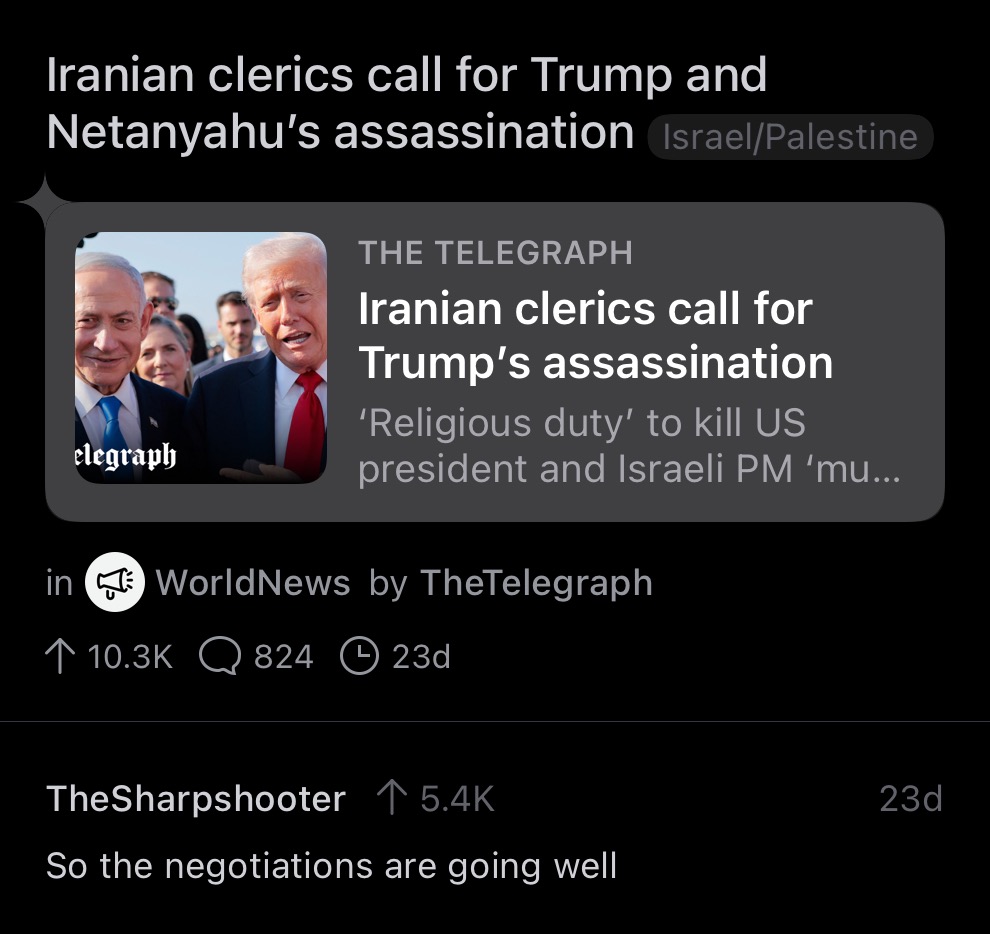
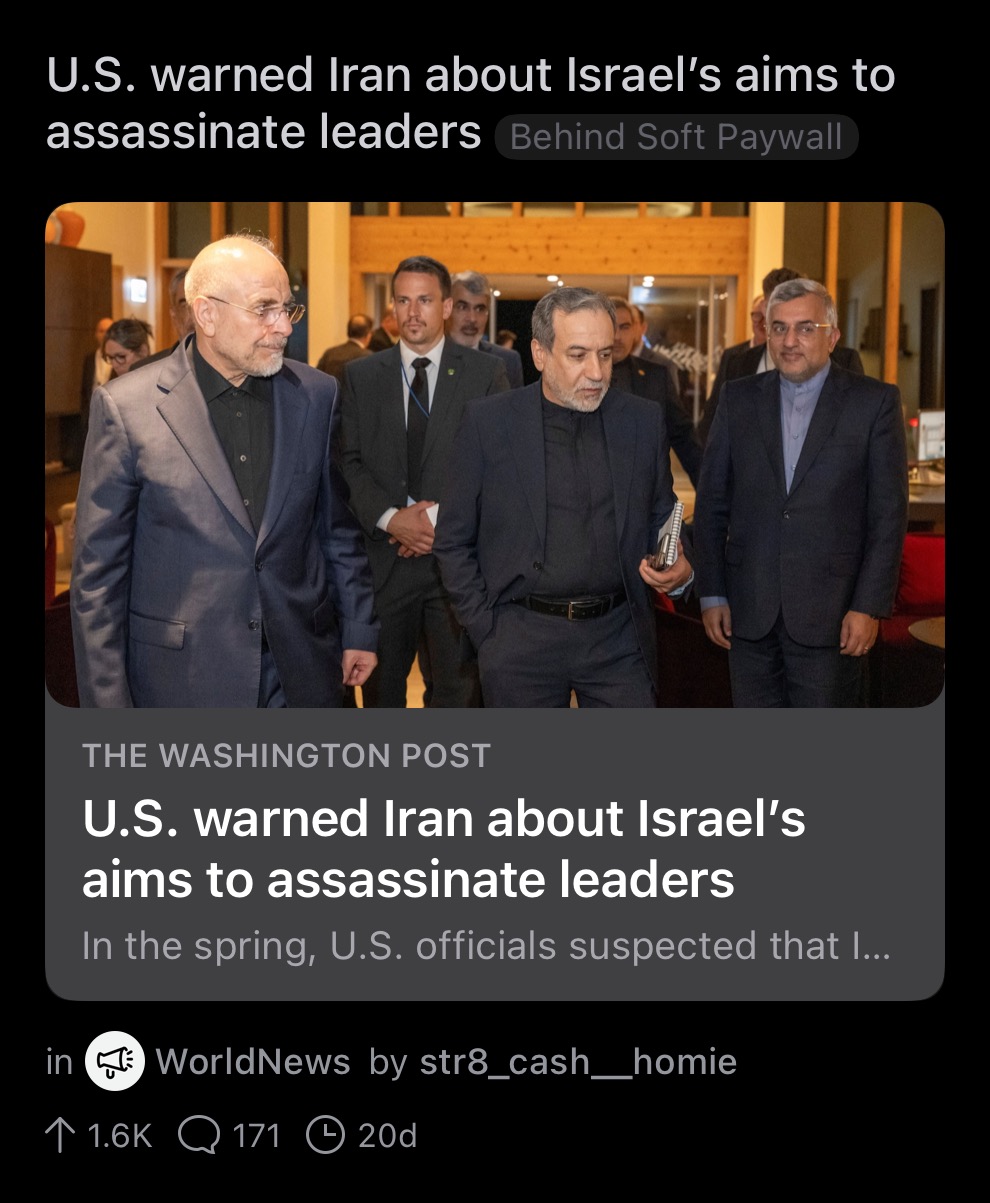
AP and the UK House of Commons Library report that Israel and the United States attacked Iran; Iran responded against Israel and targets in the Gulf and asserted control over the Strait of Hormuz.
AP reports that Iran-backed Hezbollah fired rockets at Israel; Israel retaliated and entered southern Lebanon.
AP reports that the United States and Iran reached a tenuous two-week ceasefire; Israel was not included in those discussions.
AP reports that face-to-face talks ended without agreement, the United States announced a blockade of Iranian ports, and Trump later said the ceasefire was indefinitely extended.
AP reports an Israeli ground incursion in Lebanon, resumed Israel–Lebanon fighting, and an Iranian bombardment of Israel after the early-April pause.
AP reports an interim deal announcement and a 17 June agreement; the Commons Library confirms a 17 June 14-point memorandum but notes that no official text was published.
The UN described a troubling resurgence of U.S.–Iran military confrontations and urged restraint, preservation of the ceasefire, and resumed diplomacy.
AP reports attacks on ships, U.S. strikes, and renewed sanctions; Trump declared the ceasefire “over” while saying negotiations could continue.
The UN warned that renewed Gulf confrontations risked derailing diplomatic progress and called for restraint, civilian protection, and resumed negotiations.
AP reports that the U.S. military said it hit more than 140 targets in Iran after a ship strike; Tehran said the strait was closed while the United States said it remained open.
AP reports that the United States reimposed a blockade after attacks on ships and conducted another wave of strikes, further straining the ceasefire.